CLARITY Act Faces Final Test as July 4 Deadline Closes In

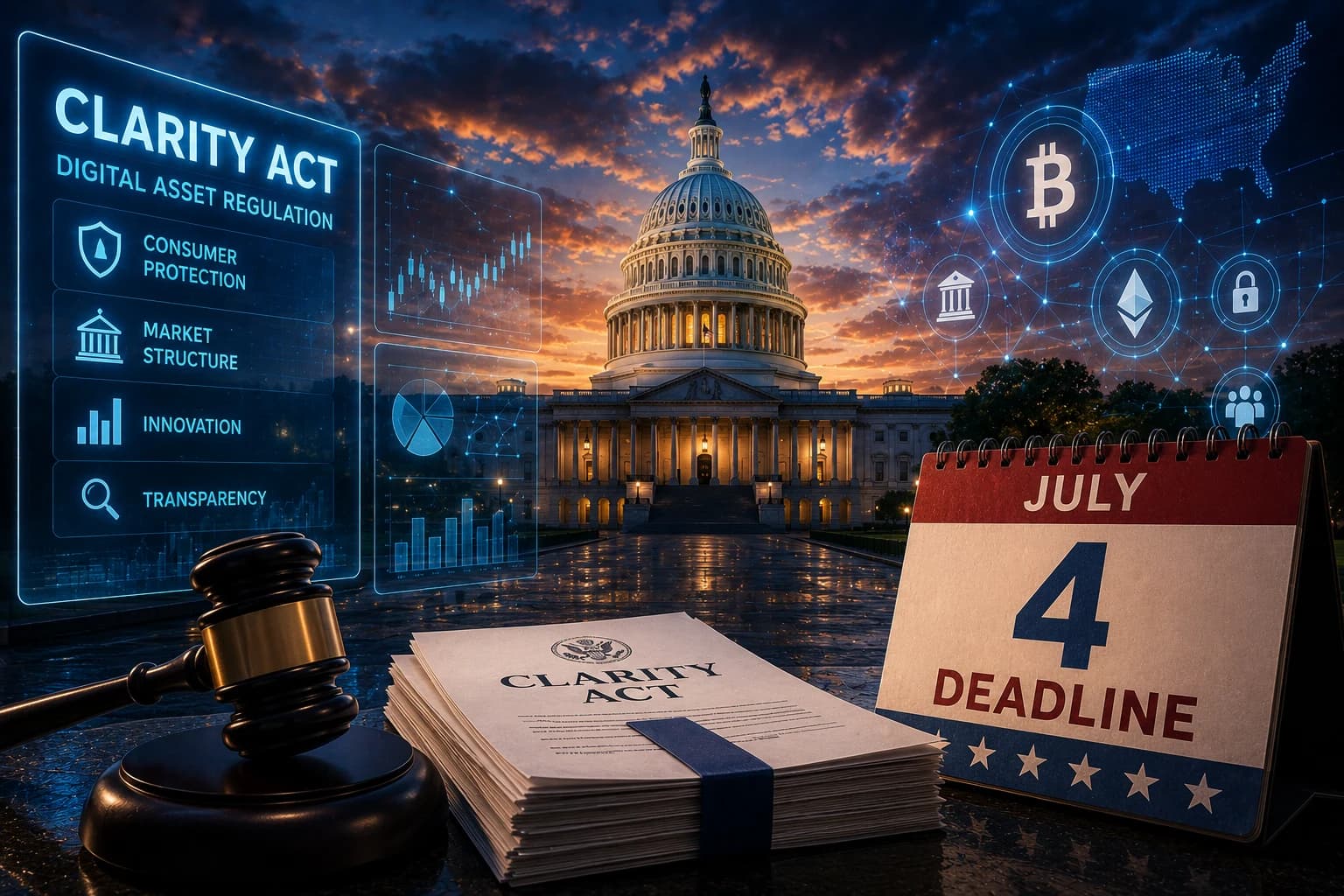
The U.S. Digital Asset Market Clarity Act faces critical Senate negotiations as lawmakers target an ambitious July 4 legislative deadline.
Quick Take
Summary is AI generated, newsroom reviewed.
The proposal resolves jurisdictional friction by dividing asset oversight between the SEC and the CFTC.
The legislation advanced past the Senate Banking Committee via a 15-9 bipartisan vote.
Senator Cynthia Lummis highlighted 150 million dollars allocated to law enforcement for fraud investigations.
Hurdles include unresolved ethics provisions, amendment procedures, and a tight pre-recess voting calendar.
The push to pass the CLARITY Act is entering its most decisive stretch yet and the clock is ticking fast. With the White House’s July 4 target date closing in, lawmakers are racing to resolve outstanding disagreements before the Senate heads into recess. The bill has already cleared significant hurdles.
It passed the House in 2025 and advanced through the Senate Banking Committee in May 2026 with a 15-9 vote. Now, the focus has shifted to hammering out final details on ethics language, jurisdictional boundaries and implementation mechanics.
A Push for Regulatory Clarity
The core of the CLARITY Act is straightforward. It draw a clear line between the SEC and the CFTC so that crypto businesses finally know who they’re answering to. Under the proposal, most digital commodity and spot-market oversight would fall to the CFTC. While the SEC retains authority over investment contract securities.
For an industry that has spent years operating in regulatory limbo, that clarity would be transformative. Advocates say it could reduce legal uncertainty. It spark innovation and keep digital asset development firmly rooted in the United States. This makes the latest crypto Clarity Act news some of the most consequential in Washington right now.
Lummis and Scott Remain Optimistic
Senator Cynthia Lummis continues to be one of the bill’s most vocal champions. Beyond the regulatory framework, she’s highlighted a provision allocating $150 million to law enforcement agencies to tackle crypto related scams and financial crimes. She’s also made self-custody rights a centerpiece of her pitch, framing them as a fundamental pillar of financial freedom.
Senator Tim Scott has similarly expressed confidence that lawmakers can find common ground, even with the calendar working against them. Still, analysts are tempering expectations. The Clarity Act July 4 deadline was always ambitious and finalizing legislative language, locking in bipartisan support. It is clearing Senate procedural requirements is a heavy lift in a compressed window.
What Happens Next?
The next few weeks will be telling. If negotiations move smoothly, supporters believe the CLARITY Act could become one of the most significant achievements in U.S. digital asset policy history. It is strengthening consumer protections. Also, funding enforcement efforts and creates clearer pathways for blockchain innovation all at once.
If they don’t, the timeline extends further into 2026 and the industry waits longer still. For anyone tracking crypto regulation news, the outcome of this debate carries real weight. Whether Congress hits the July 4 mark or misses it, the CLARITY Act has already established itself. As the defining piece of digital asset legislation in Washington and its fate will shape the U.S. crypto landscape for years to come.
References


Follow us on Google News
Get the latest crypto insights and updates.