Tom Emmer Says Clarity Act Is Heading to Trump’s Desk
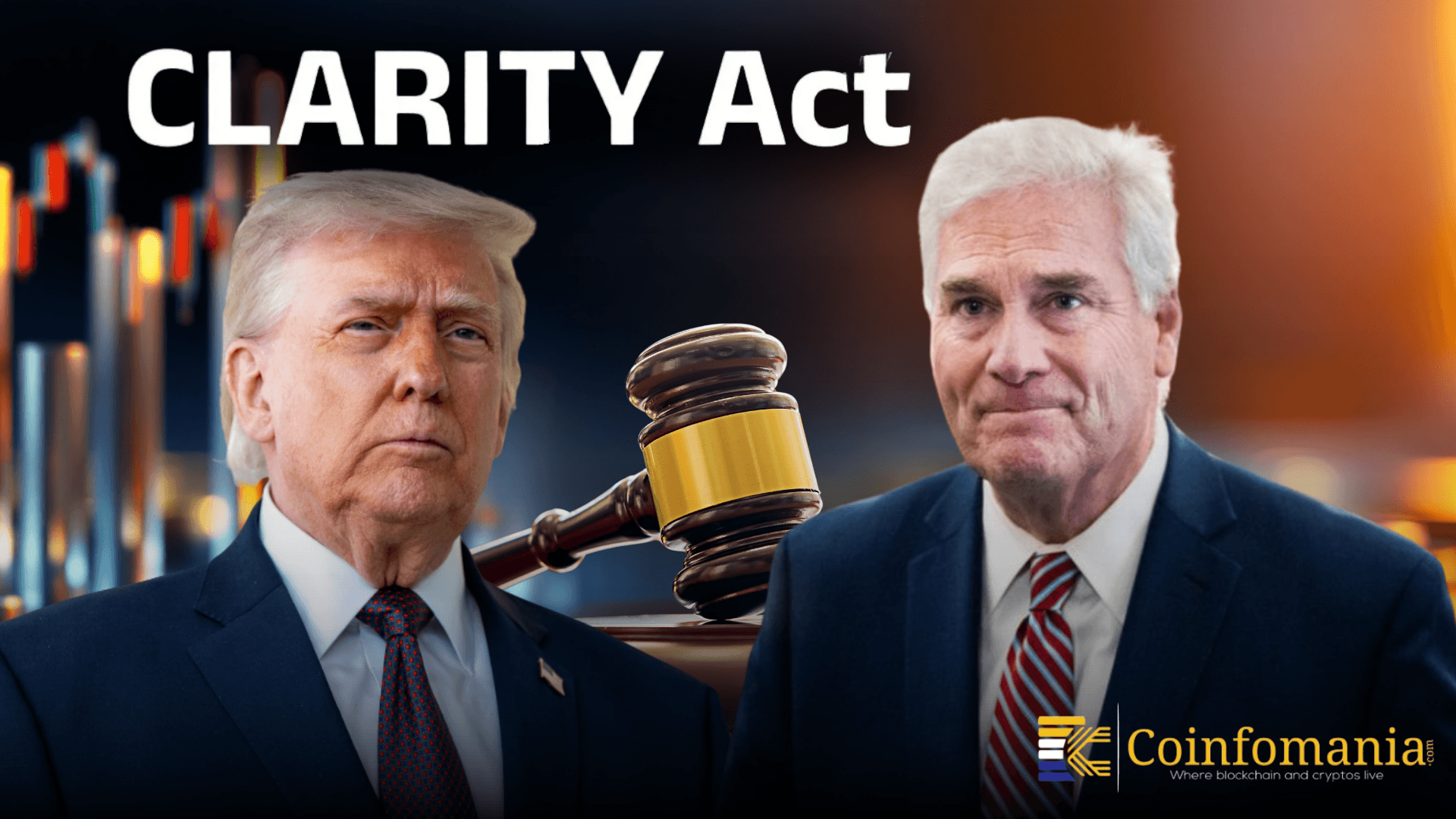
The CLARITY Act gained momentum after a bipartisan 15-9 Senate Banking Committee vote, aiming for final approval under President Trump.
Quick Take
Summary is AI generated, newsroom reviewed.
House Majority Whip Tom Emmer expects the landmark legislation to successfully reach the president's desk for final approval.
The bill establishes a clear legal taxonomy dividing oversight between the SEC for securities and the CFTC for decentralized commodities.
Bipartisan support included all committee Republicans alongside Democratic Senators Ruben Gallego and Angela Alsobrooks.
The framework addresses industry fragmentation by setting unified standards for crypto exchanges, stablecoins, and consumer protection.
The Digital Asset Market CLARITY Act of 2025 is gaining major momentum in Washington. After House Majority Whip Tom Emmer said he expects the legislation to eventually land on President Donald Trump’s desk. The latest push comes after the Senate Banking Committee approved the bill in a bipartisan 15-9 vote earlier this month.
LATEST: 🇺🇸 House Majority Whip Tom Emmer says the CLARITY Act has momentum, citing the Senate Banking Committee's 15-9 bipartisan vote and predicting it will land on Trump's desk. https://t.co/8Qw83sSr8u pic.twitter.com/ny6CIhGCMB
— CoinMarketCap (@CoinMarketCap) May 23, 2026
Supporters say the proposal could become one of the most important crypto regulatory frameworks in U.S. history. The legislation aims to finally divide oversight responsibilities between the SEC and CFTC. While giving the digital asset industry long-awaited legal clarity after years of enforcement-driven regulation.
CLARITY Act Advances With Bipartisan Support
The CLARITY Act has steadily moved through Congress since first passing the House in July 2025 with a strong 294-134 vote. Now, the Senate Banking Committee has advanced the bill with support from all Republican members. Alongside Democratic Senators Ruben Gallego and Angela Alsobrooks. Tom Emmer recently highlighted the bill’s growing momentum. He says the legislation is moving closer toward final approval under the Trump crypto administration. The bill would create a clearer structure for regulating digital assets in the United States.
Under the proposal:
- The SEC would oversee security-like digital assets
- The CFTC would regulate decentralized digital commodities
- Crypto exchanges would face clearer operational rules
- Stablecoin and disclosure standards would expand
- Consumer protections would strengthen
Supporters believe the framework could reduce years of confusion surrounding crypto classification.
Why the CLARITY Act Matters
For years, crypto companies argued that regulators relied too heavily on lawsuits instead of formal rules. The CLARITY Act 2026 attempts to solve that problem by defining when a blockchain project qualifies as decentralized. Also when a token should be treated as a security.
Senate Banking Chair Tim Scott called the legislation “historic” for helping place America back at the center of digital asset innovation. The proposal also builds alongside other crypto-focused legislation. That includes the GENIUS Act for stablecoin regulation. But the bill still faces several hurdles before becoming law. It must still pass the Senate Agriculture Committee, secure enough Senate floor votes and later reconcile with House language before reaching Trump’s desk.
Impact on Investors
For investors, the bill could become a turning point for the U.S. crypto market. Clearer regulations may:
- Reduce enforcement-related uncertainty
- Improve institutional confidence
- Encourage new crypto ETFs and investment products
- Increase market liquidity
- Support broader mainstream adoption
Analysts believe Bitcoin, Ethereum and major altcoins could benefit if institutional capital feels safer entering regulated markets. Still, short-term volatility may continue while lawmakers negotiate final provisions.
Developers Could Finally Get Regulatory Clarity
The legislation may also provide major relief for blockchain developers. Many crypto startups previously avoided building in the United States because of unclear SEC enforcement risks. If passed, the crypto CLARITY Act would help developers distinguish between securities and decentralized commodities more clearly. That could encourage more U.S. based innovation in DeFi, NFTs, tokenization and Web3 infrastructure. The framework may also slow the industry’s ongoing talent migration toward offshore jurisdictions with friendlier crypto laws.
What Happens Next
The White House has consistently backed pro-crypto policies since Trump returned to office. With officials repeatedly promised to make America the “crypto capital of the world.” That political support has strengthened optimism surrounding the crypto CLARITY Act. While challenges remain in the Senate. The latest bipartisan vote and Tom Emmer’s comments suggest U.S. crypto regulation is entering its most serious legislative phase yet. If passed, the bill could reshape how digital assets operate in the United States for years to come.


Follow us on Google News
Get the latest crypto insights and updates.
Related Posts

Ripple’s RLUSD Hits $1.76B ATH — While PayPal’s Stablecoin Stalls

Shweta Chakrawarty
Author

Pi Network Debunks V26 Cancellation — Testnet Already Running It
Shweta Chakrawarty
Author

Fed Chair Kevin Warsh Confirmed: Inflation Pressure, High Yields & Bitcoin Market Implications

Triparna Baishnab
Author