Ripple Demands 0% Haircut on Stablecoins in SEC Rules

Ripple submits specific technical proposals to the SEC Crypto Task Force, demanding a 0% capital haircut for qualifying payment stablecoins.
Quick Take
Summary is AI generated, newsroom reviewed.
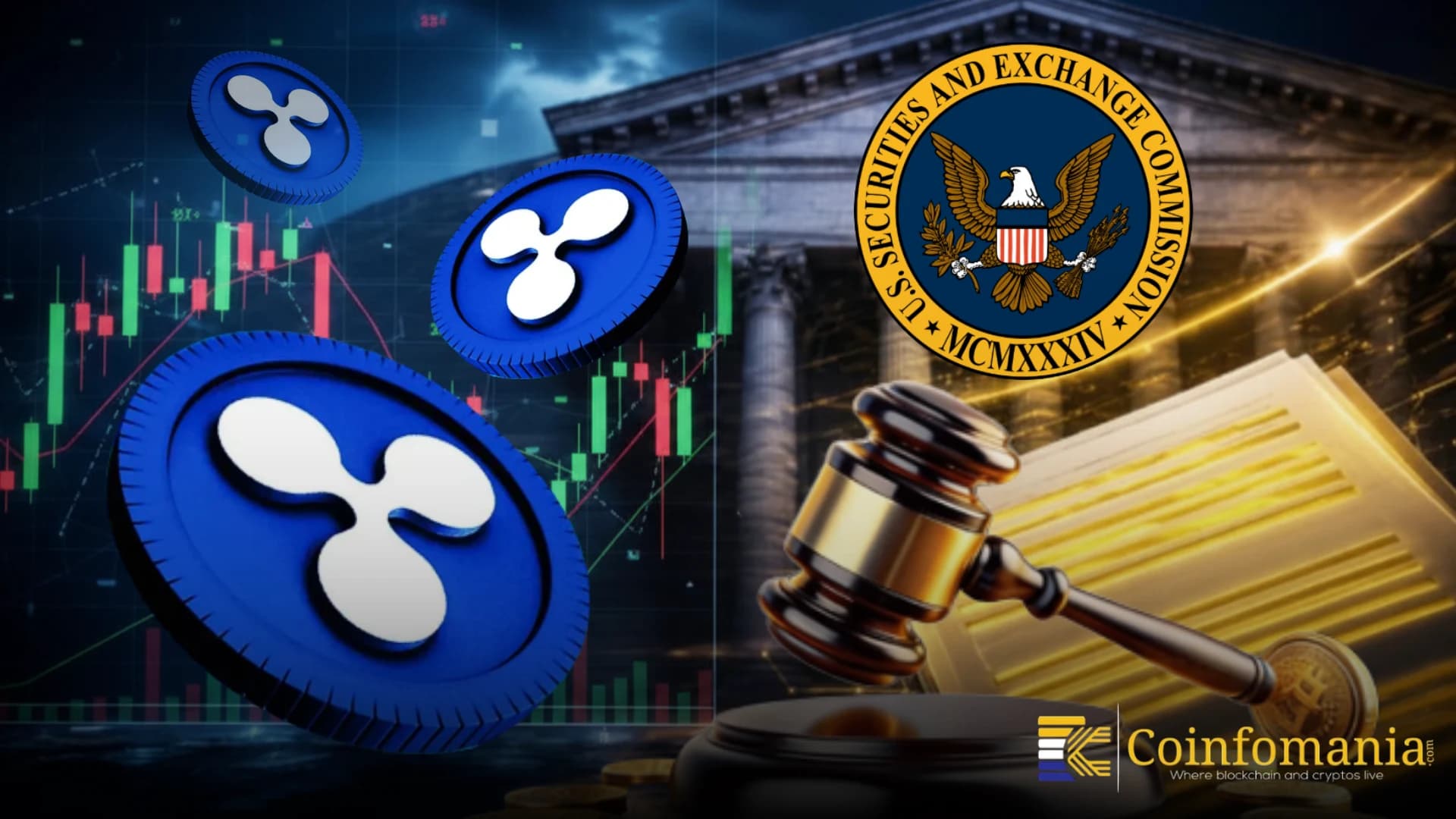
Ripple formally urged the SEC to lower the capital haircut for stablecoins under Rule 15c3-1 from 2% down to 0%.
The company's statistical analysis argued that a 2% deduction is mathematically punitive based on five-year asset volatility data.
Ripple's proposal targets stablecoins like RLUSD and USDC when a direct mint-burn relationship exists with the issuer.
The formal letter also requests that XRP receive equivalent broker-dealer "readily marketable" treatment to Bitcoin and Ethereum.
Ripple is no longer just asking for regulatory clarity. It is submitting specific technical proposals backed by statistical analysis. On May 22, 2026, Ripple sent a formal follow-up letter to the SEC Crypto Task Force addressing five regulatory gaps. That it argues are slowing stablecoin adoption and tokenized asset development in the United States.
Ripple Pushes SEC On Stablecoin Rules
— BSCN (@BSCNews) May 28, 2026
Ripple (@Ripple) has asked the SEC Crypto Task Force for clearer treatment of payment stablecoins and tokenized assets under broker dealer regulations.
The company is reportedly pushing for a 0% haircut on qualifying payment stablecoins… pic.twitter.com/PTJj3QQXnd
The centerpiece demand is a 0% capital haircut for qualifying payment stablecoins. It is down from the 2% level currently applied under broker-dealer net capital rules. Ripple news today positions the company as one of the most technically engaged participants in the SEC’s crypto rulemaking process.
Why Ripple Calls the 2% Haircut Punitive
The current 2% haircut under Rule 15c3-1 applies to stablecoins used as collateral in broker-dealer financing transactions. However, Ripple’s letter argues this level is mathematically disproportionate. To prove this, the company conducted a volatility analysis comparing daily price movements of RLUSD, USDC, and 3-month constant maturity U.S. Treasuries over five years. Ultimately, the results are striking:
- RLUSD standard deviation: 0.0418% daily
- USDC standard deviation: 0.0156% daily
- 3-month UST standard deviation: 0.00496% daily
Based on these figures, Ripple calculated that a 2% haircut represents a 47.85 standard deviation move for RLUSD. It is equivalent to a probability of roughly 1 − 10⁻⁴⁹⁹%. In practice, the threshold is so conservative it bears no meaningful relationship to actual stablecoin price risk.
Ripple’s proposal: where a direct mint-burn relationship exists between the broker-dealer and the stablecoin issuer, the haircut should be 0%. The secondary market price becomes irrelevant when a firm can redeem directly at par.
The Five Demands in Detail
Ripple’s letter covers five specific regulatory areas:
- Rule 15c3-1 (Net Capital): Recognize qualifying stablecoins as allowable assets with a 0% haircut under mint-burn conditions.
- Rule 15c3-3 (Customer Protection): Create a “Qualified Payment Stablecoin” category allowing stablecoin balances to be treated as cash equivalents in the reserve formula.
- Non-security crypto assets: Extend BTC and ETH’s “readily marketable” treatment to any non-security meeting the standard. This effectively requests equivalent broker-dealer treatment for XRP
- On-chain registry primacy: Designate the on-chain registry as the single authoritative legal record for directly issued tokenized securities. It eliminates dual-registry ambiguity in digital twin structures.
- OCC-chartered trust banks: Clarify that federally supervised digital asset custodians qualify as “banks” under Rule 15c3-3.
Implications for Investors and Developers
For GENIUS Act stablecoin infrastructure builders and institutional participants, the 0% haircut proposal has direct commercial significance. Currently, 2% requirements reduce the capital efficiency of stablecoin-based financing, thereby raising costs for every firm using RLUSD or similar instruments as collateral. Consequently, a 0% haircut under mint-burn conditions would meaningfully lower those costs and accelerate institutional adoption.
For XRP holders, the non-security equivalence request is the most significant element. Specifically, Ripple is formally asking the SEC to treat XRP with the same regulatory standing as Bitcoin and Ethereum in broker-dealer capital calculations. It’s a change that would ultimately remove the last meaningful compliance barrier for institutional XRP positioning. Therefore, the SEC Crypto Task Force’s response will signal how far the current administration’s crypto-friendly posture extends into specific technical rulemaking.
References


Follow us on Google News
Get the latest crypto insights and updates.