SEC’s Atkins Ends Crypto Enforcement Era With Clarity Pledge

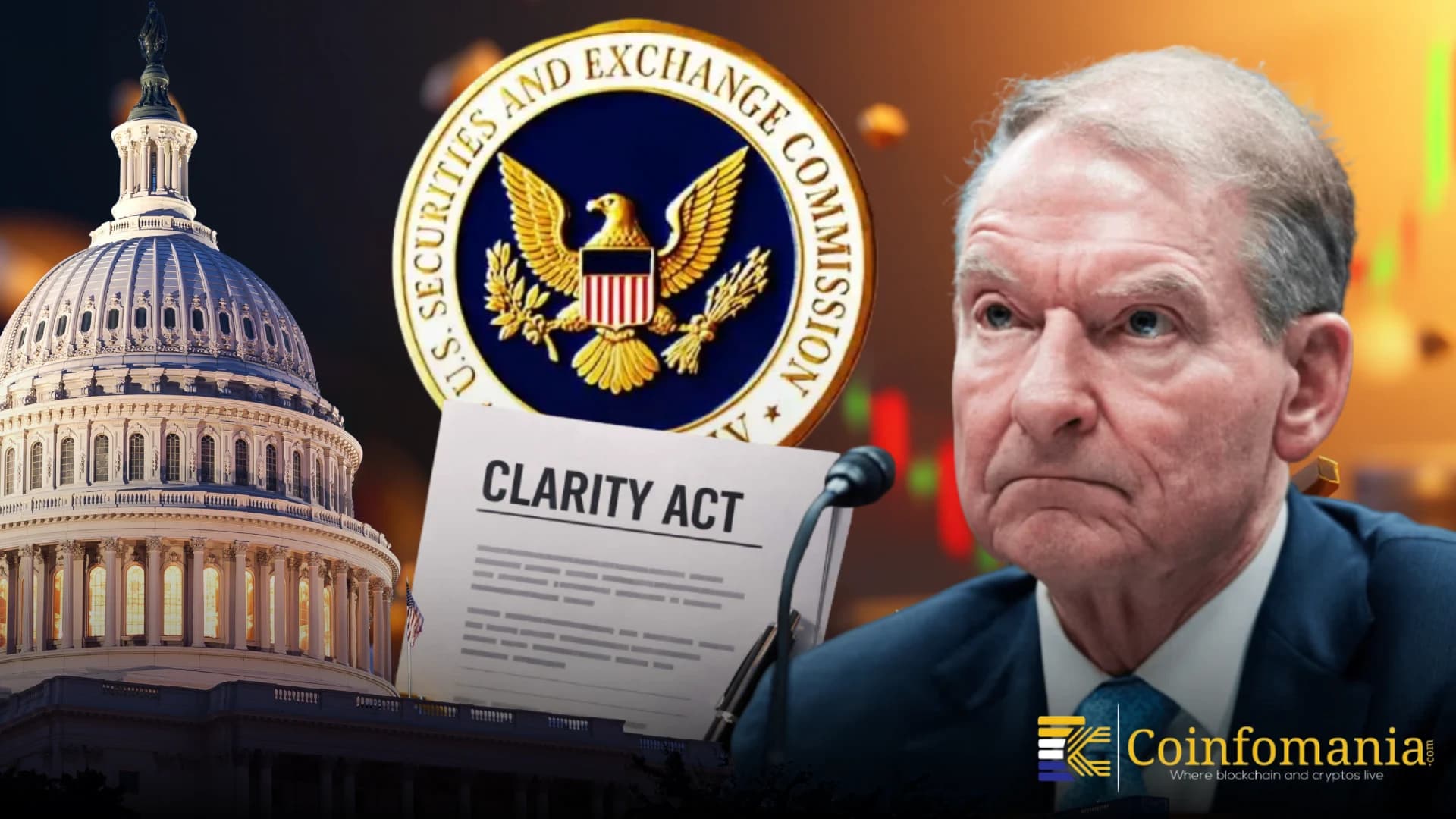
SEC Chair Paul Atkins declared the era of the SEC being at odds with technology is over, boosting momentum for the advancing Clarity Act.
Quick Take
Summary is AI generated, newsroom reviewed.
SEC Chair Paul Atkins announced the agency will prioritize clear digital asset rules and move away from aggressive enforcement tactics.
Senator Cynthia Lummis urged Congress to fast-track the Digital Asset Market Clarity Act to President Trump's desk for final signature.
Under Project Crypto, the SEC focuses on clearer token classifications and closer regulatory coordination with the CFTC.
The pending framework would give the CFTC oversight of digital commodities while limiting SEC authority to securities-like tokens.
SEC Chair Paul Atkins just delivered one of the clearest signals yet that Washington’s crypto strategy is changing. Speaking this week, Atkins declared that the era of the SEC being “at odds with technology and innovation” is officially over. Instead, he pledged to deliver regulatory clarity for digital assets alongside Congress and the Trump administration.
The statement immediately boosted momentum around the Clarity Act. As Senator Cynthia Lummis urged Congress to fast-track the bipartisan legislation to President Trump’s desk. Together, the remarks reflect what many in the industry now see as a historic shift. Away from enforcement-driven regulation and toward formal crypto market structure rules.
Atkins Pushes End of “Regulation by Enforcement”
Since taking office in 2025, Paul Atkins has steadily moved the SEC away from the aggressive enforcement strategy associated with former Chair Gary Gensler. Under Atkins’ “Project Crypto” initiative, the SEC has focused on:
- Creating clearer token classifications.
- Distinguishing commodities from securities.
- Supporting compliant on-chain markets.
- Coordinating more closely with the CFTC.
- Reducing reliance on lawsuits as policy tools.
Atkins said the administration is now working to deliver “much needed clarity” for digital asset markets under President Trump’s leadership. The language matters. For years, crypto firms argued that unclear SEC policies pushed innovation offshore. It discouraged institutional participation inside the United States. Now, SEC news today increasingly centers around rebuilding confidence in U.S. crypto regulation.
Cynthia Lummis Rallies Support for the Clarity Act
Shortly after Atkins’ comments, Senator Cynthia Lummis publicly called on Congress to send the Digital Asset Market Clarity Act to Trump for final approval.
Where other admins have senselessly punished the digital asset industry, Pres. Trump has promoted policies that embrace this industry & help it thrive. Let’s get the bipartisan Clarity Act to his desk so he can make the U.S. the crypto capital of the world with a stroke of a pen https://t.co/LADiQHAY8w
— Senator Cynthia Lummis (@SenLummis) May 28, 2026
The Clarity Act 2026 proposal already passed the House in 2025. It recently advanced through the Senate Banking Committee. But it still needs full Senate approval before reaching the White House.
The legislation would:
- Give the CFTC oversight of most digital commodities.
- Limit SEC authority to securities-like tokens.
- Create registration paths for exchanges.
- Introduce clearer DeFi and stablecoin rules.
- Reduce uncertainty for builders and investors.
Many analysts now describe the current situation as a rare alignment between regulators, lawmakers, and the White House.
Why the Shift Matters for Crypto Markets
The broader crypto industry sees the SEC’s policy pivot as a major turning point. During the previous administration, several firms relocated operations outside the U.S. because of regulatory uncertainty and enforcement risks. Supporters of the Clarity Act argue clearer rules could reverse that trend.
Potential impacts include stronger institutional investment. It includes faster stablecoin adoption and broader expansion of tokenized assets across financial markets. The shift could also accelerate the growth of U.S. based crypto startups. While reducing legal uncertainty for developers building blockchain products and decentralized applications.
At the same time, Atkins emphasized that investor protection and anti-fraud enforcement will remain priorities. The SEC is not abandoning oversight. Instead, the agency appears focused on replacing uncertainty with structured rules.
America’s Race for Crypto Leadership
The policy shift also comes as global competition intensifies. Regions like Europe, Singapore, Hong Kong, and the UAE have already rolled out clearer crypto frameworks. U.S. lawmakers increasingly worry America could lose its leadership position if regulation remains fragmented. That concern now sits at the center of both Project Crypto and the Clarity Act. Supporters believe the legislation could help establish the United States. As the long term hub for blockchain innovation, digital assets, and decentralized finance.
What Happens Next
The Clarity Act still faces political hurdles before becoming law. Senate negotiations, election-year dynamics and final reconciliation procedures could delay the process. Still, the combination of Atkins’ SEC reforms and Cynthia Lummis’ renewed push signals. That Washington’s crypto debate has fundamentally shifted. For the first time in years, the conversation is no longer centered on whether crypto should exist in America but how the U.S. plans to lead it.
References


Follow us on Google News
Get the latest crypto insights and updates.