XRP News Today: Latest Updates and Market Trends

Explore the latest XRP news, including SEC developments, Ripple partnerships, XRP Ledger upgrades, price outlook.
XRP has been one of the most closely watched digital assets in 2026, and for good reason. Between a shifting regulatory environment, growing institutional interest, and significant technical upgrades to the XRP Ledger, there’s a lot happening that directly affects how traders and long-term holders should think about their positions. The past few months alone have brought major developments: Ripple’s legal saga with the SEC is entering a new chapter, central banks are piloting CBDC programs on Ripple’s infrastructure, and on-chain activity is hitting levels not seen since the 2021 bull run.
Whether you’re checking XRP news today for a quick market pulse or trying to understand the bigger picture, this piece breaks down what actually matters right now. I’ve been tracking this asset through multiple market cycles, and the current setup is one of the more interesting ones I’ve seen. The convergence of legal clarity, institutional adoption, and technical innovation creates a situation where the next 6 to 12 months could define XRP’s trajectory for years. Here’s what you need to know.
Current XRP Price Performance and Market Sentiment
XRP has spent much of mid-2026 trading in a relatively tight range, consolidating after a strong Q1 rally that saw prices push above $2.80. Market sentiment is cautiously optimistic, though tempered by broader macroeconomic uncertainty and seasonal patterns. Analysts have pointed out that XRP historically tends to see pullbacks during June in midterm years, which has some traders positioning defensively heading into summer.
The overall crypto market cap has been holding above $3.5 trillion, and XRP’s share of that has been gradually increasing as institutional flows pick up. On-chain data shows whale accumulation has been steady, with wallets holding over 1 million XRP increasing by roughly 4% since March.
Key Support and Resistance Levels to Watch
The $2.20 to $2.30 zone has acted as strong support on multiple retests this year, with significant buy-side liquidity clustered around that range. On the upside, $3.00 remains the psychological resistance level that bulls need to flip convincingly. A sustained close above $3.00 on weekly candles would likely trigger a move toward the $3.50 to $3.80 range, where cost-basis clusters from 2025 buyers sit.
Short-term traders should also watch the 50-day moving average, currently sitting near $2.55, as a pivot point. Funding rates on perpetual futures have been slightly positive but not overheated, suggesting the market isn’t overly leveraged in either direction.
Trading Volume and Liquidity Trends
Daily trading volume for XRP has averaged around $2.8 billion through Q2 2026, a meaningful increase from the $1.5 billion average in late 2025. Much of this volume is coming from Asian exchanges, particularly in South Korea and Japan, where Ripple’s payment corridor partnerships have driven retail interest. Liquidity depth on major order books has improved substantially, which means large orders are causing less slippage than they did even six months ago. Prediction markets have been pricing XRP around $2.50 to $2.70 for early June 2026, reflecting the current consolidation phase.
Ripple vs. SEC Legal Developments
The Ripple-SEC case has been the single most important narrative for XRP since 2020, and it continues to shape how both retail and institutional investors approach the asset. While the original district court ruling in 2023 provided partial clarity, the appeals process has kept a cloud of uncertainty hanging over the token.
Status of the Appeals Process
The SEC’s appeal of Judge Torres’ 2023 ruling has been working through the Second Circuit, and 2026 has brought some significant procedural developments. Oral arguments were heard in Q1, and most legal observers expect a decision by late summer or early fall. The core question remains whether programmatic sales of XRP on secondary markets constitute securities transactions. Ripple’s legal team has argued forcefully that they do not, and the broader crypto industry has filed numerous amicus briefs supporting that position.
A favorable ruling for Ripple would likely trigger a substantial price move, as it would remove the last major legal overhang. Even a partial affirmation of the lower court’s ruling would be considered a win for the XRP community.
Impact of Regulatory Clarity on XRP Adoption
Beyond the court case itself, the broader regulatory environment in the U.S. has been shifting. The CLARITY Act, which aims to establish clearer definitions for digital asset classification, has been a key factor in shaping institutional confidence around XRP. If passed, it would provide a legislative framework that could make the SEC’s case against Ripple largely moot.
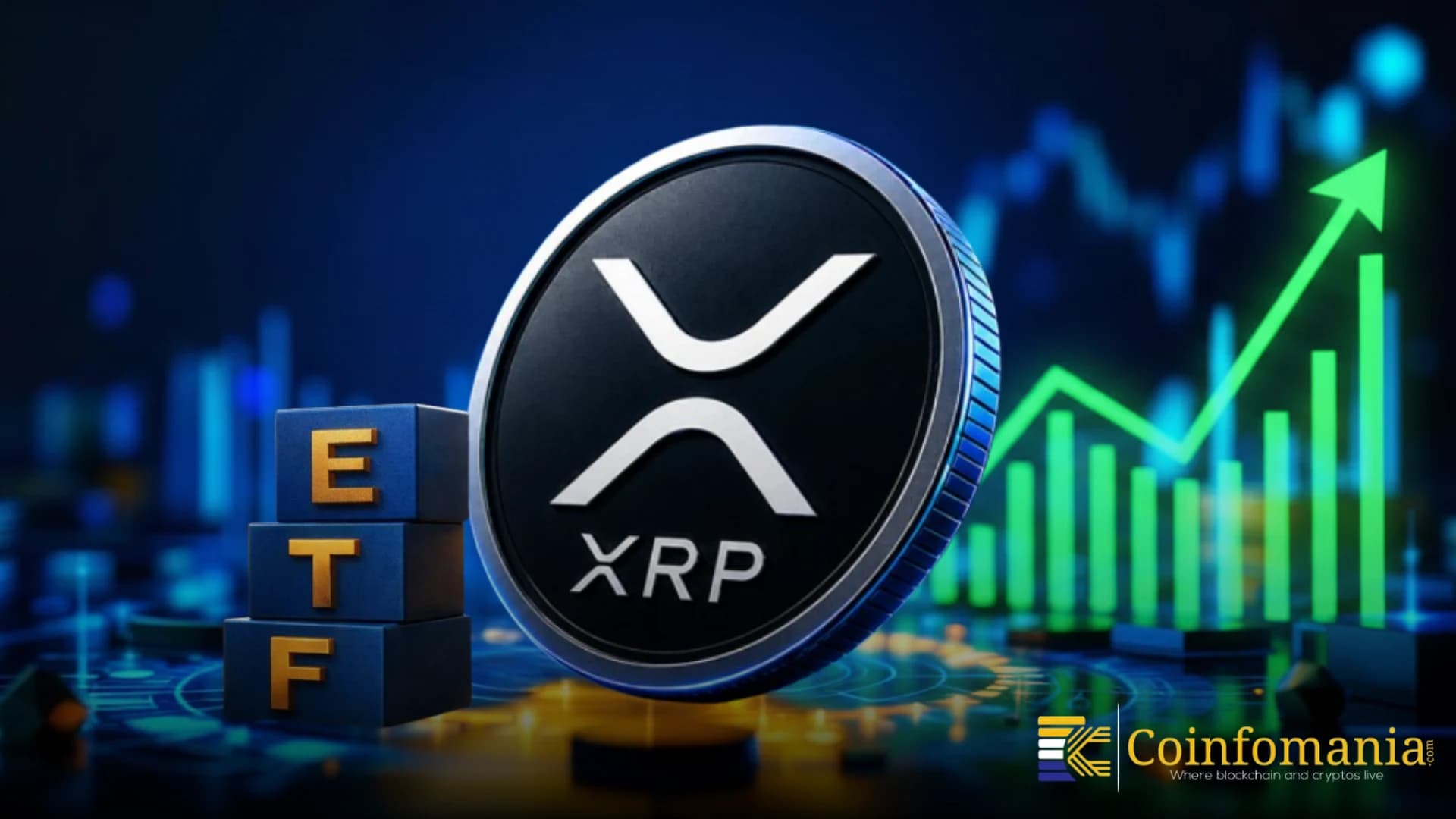
Multiple asset managers have filed for spot XRP ETFs, and the expectation is that regulatory clarity – whether from the courts or Congress – will be the catalyst that unlocks ETF approvals. This matters enormously because ETF access would open XRP to retirement accounts, institutional allocators, and wealth management platforms that currently can’t touch it.
Ripple Ecosystem Growth and Institutional Partnerships
Ripple the company has been quietly building one of the most extensive institutional networks in crypto, and 2026 has accelerated that trend significantly. The focus has shifted from just cross-border payments to a broader financial infrastructure play.
Expansion of RippleNet and ODL Services
RippleNet now connects over 300 financial institutions across 55 countries, and On-Demand Liquidity (ODL) corridors have expanded into Latin America and Africa this year. The key insight here is that ODL transactions require actual XRP purchases and sales, creating organic demand that isn’t purely speculative. Transaction volumes through ODL have grown substantially as XRPL activity and institutional partnerships expand, with Q1 2026 seeing record throughput.
Ripple’s acquisition of Metaco in 2023 and its subsequent custody infrastructure buildout have also positioned the company as a one-stop shop for banks looking to offer digital asset services. Several mid-tier European banks have onboarded Ripple’s custody solution under MiCA compliance frameworks.
Central Bank Digital Currency (CBDC) Pilot Programs
Ripple has been running CBDC pilot programs with central banks in Palau, Bhutan, Montenegro, and Colombia. The XRPL’s private ledger variant has been the technology backbone for several of these initiatives. While CBDCs are politically contentious in some regions, the practical reality is that central banks are building this infrastructure regardless of public sentiment, and Ripple is winning a meaningful share of those contracts.
The CBDC work also creates a flywheel effect: as more central banks test on Ripple’s technology, the interoperability case for XRP as a bridge asset between different national digital currencies strengthens.
Technological Advancements on the XRP Ledger
The XRPL has undergone significant upgrades in 2025 and 2026, moving well beyond its original identity as a payments-focused chain. The goal is clear: make the XRPL competitive with Ethereum and Solana for a broader range of financial applications while maintaining its speed and low transaction costs.
Smart Contract Integration and Sidechain Updates
The Hooks amendment, which enables smart contract-like functionality directly on the XRPL, has been in testing and is expected to go live on mainnet in late 2026. Meanwhile, the EVM-compatible sidechain has been operational since 2025, allowing Solidity developers to deploy contracts that settle back to the XRPL. This is the “abstraction” play: making the underlying blockchain invisible to end users while enabling complex financial logic.
The sidechain approach is smart because it doesn’t compromise the main ledger’s performance. The XRPL still settles transactions in 3 to 5 seconds with fees under $0.01, and that speed is preserved for payment use cases even as more complex DeFi applications run on sidechains.
NFT and DeFi Projects Gaining Traction
The native NFT standard (XLS-20) has seen growing adoption, particularly for real-world asset tokenization. Several platforms are now tokenizing real estate, carbon credits, and trade finance instruments on the XRPL. DeFi total value locked on XRPL-connected protocols has grown from roughly $80 million in early 2025 to over $400 million by mid-2026, though it still trails Ethereum and Solana by a wide margin.
RWA tokenization is where the XRPL has a genuine competitive advantage. Its built-in DEX, low fees, and institutional relationships through Ripple make it a natural fit for tokenizing traditional financial instruments. This isn’t speculative DeFi yield farming – it’s the digitization of existing financial products, which is a much larger addressable market.
Future Outlook and Expert Price Predictions
The next 12 months could be pivotal for XRP, with multiple catalysts converging in a way that hasn’t happened before. Legal resolution, ETF approvals, CBDC deployments, and technical upgrades are all on roughly the same timeline.
Macroeconomic Factors Influencing Crypto Markets
The Federal Reserve’s rate path remains the dominant macro variable for all risk assets, crypto included. With inflation stabilizing near 2.5% and rate cuts expected in H2 2026, the macro backdrop is turning more favorable. XRP has historically shown strong correlation with the S&P 500 during risk-on periods, and a sustained equity rally would likely lift crypto markets broadly. Some analysts believe XRP could outperform Solana during the 2026 institutional rally due to its regulatory progress and institutional partnerships.
Global liquidity conditions matter too. The Bank of Japan’s policy normalization and China’s stimulus measures are creating cross-currents, but the net effect has been a gradual increase in global M2 money supply, which has historically been bullish for crypto.
Long-Term Growth Potential for XRP Holders
Price predictions vary widely, as they always do in crypto. Conservative estimates from analysts place XRP in the $3.50 to $5.00 range by year-end 2026 if the legal situation resolves favorably and an ETF launches. More aggressive projections, often based on longer-term models factoring in post-SEC settlement dynamics, target $7 to $10 by 2028.
The monthly escrow unlocks of 1 billion XRP remain a concern for some investors, though Ripple has historically relocked the majority of each release. The actual sell pressure from escrow is far lower than the headline numbers suggest.
What This Means for Your Portfolio
For long-term holders, the thesis is straightforward: XRP has never had this many institutional catalysts aligning simultaneously. The legal clarity, ETF pipeline, CBDC partnerships, and XRPL upgrades create a fundamentally different risk-reward profile than existed even a year ago. Accumulating on dips toward the $2.20 support zone and holding through the catalyst events is the patient play.
Short-term traders should watch the $3.00 resistance level closely. A breakout above that level with strong volume would signal a trend change, while rejection could mean another few weeks of range-bound action. Keep position sizes reasonable given the binary nature of the legal catalyst – a surprise adverse ruling would cause a sharp drawdown.
The XRP story in 2026 isn’t about hype or speculation. It’s about whether six years of legal battles, infrastructure building, and technical development finally translate into mainstream institutional adoption. The pieces are falling into place, but execution still matters. Stay informed, manage risk, and let the catalysts play out.


Follow us on Google News
Get the latest crypto insights and updates.